Basketball Arbitrage Betting: How to Lock In Risk-Free Profits Across Bookmakers
 Available in US
The Night I Discovered Bookmakers Disagree
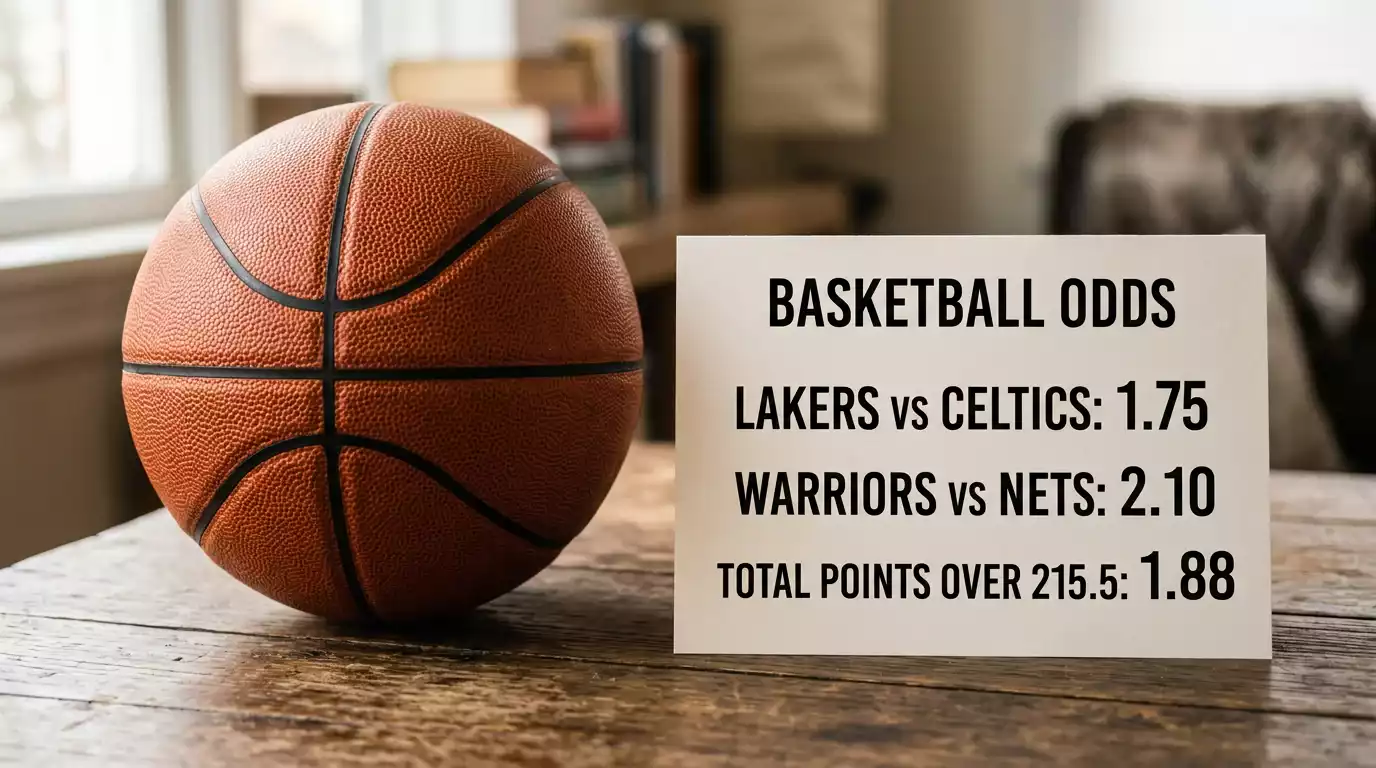
It was a Thursday evening in 2020, and I had three different bookmaker tabs open for the same NBA game. One had the home team at 2.15 on the moneyline. Another had the away team at 2.05. I did the arithmetic twice because the numbers seemed wrong — backing both sides across the two operators guaranteed a profit regardless of which team won. That was my introduction to arbitrage betting, and it fundamentally altered how I think about the relationship between odds, markets, and bookmaker pricing.
Arbitrage — often shortened to “arbing” — exploits price discrepancies between different bookmakers on the same event. When one operator’s odds on Outcome A and a second operator’s odds on Outcome B combine to imply a total probability of less than 100%, you can stake both sides in precise proportions and guarantee a return. The concept is borrowed from financial markets, where traders have used arbitrage for centuries. In basketball betting, arb opportunities appear more frequently than most punters realise, particularly around tip-off when lines are moving fastest.
How Arbing Actually Works in Practice
The mathematics is disarmingly simple. Suppose Bookmaker A offers the Boston Celtics at decimal odds of 2.20, while Bookmaker B offers their opponents at 2.10. To check for an arb, you calculate the combined implied probability: (1/2.20) + (1/2.10) = 0.4545 + 0.4762 = 0.9307. Because that sum is below 1.00, an arb exists. The profit margin is approximately 1 – 0.9307 = 6.93%, which is unusually generous — most real arbs deliver between 0.5% and 3%.
To calculate the correct stake split, divide your total outlay proportionally. If you want to deploy GBP 200 total, you would place GBP 200 x (1/2.20) / 0.9307 = GBP 97.53 on the Celtics at Bookmaker A, and GBP 200 x (1/2.10) / 0.9307 = GBP 102.47 on the opponents at Bookmaker B. If the Celtics win, you collect 97.53 x 2.20 = GBP 214.57. If the opponents win, you collect 102.47 x 2.10 = GBP 215.19. Either way, your GBP 200 outlay returns roughly GBP 214-215 — a locked-in profit of about 7%.
That example is idealised. Real arbs are smaller, fleeting, and harder to execute cleanly. But the principle holds, and it is one of the few approaches in sports betting that eliminates risk entirely from the individual bet — though not, as I will explain, from the overall strategy.
Where Basketball Arbs Appear
Basketball produces more arb opportunities than most sports for a specific structural reason: the volume of markets per game. An NBA contest might have two hundred or more individual markets across different operators — moneyline, spread, totals, quarter lines, player props, and specials. Each market is priced semi-independently by each bookmaker, and the more markets there are, the more chances for two operators to disagree on the same outcome.
The most common basketball arbs occur on moneylines for games between evenly matched teams. When the implied probability is close to 50/50, bookmakers have the least room for error, and even small differences in their models produce exploitable gaps. I also find arbs regularly on first-half and first-quarter lines, which receive less attention from sharp bettors and are therefore priced with wider margins of error.
Timing is critical. Arb windows on basketball games typically open in the two hours before tip-off, when different operators update their lines at different speeds in response to late injury news, lineup confirmations, and sharp money hitting one side. An arb that exists at 6:45 PM might vanish by 6:48 PM. Speed of detection and execution determines whether you capture the opportunity or stare at a screen showing odds that have already moved.
The Realities Arbing Guides Never Mention
I want to be direct about the challenges, because too many guides present arbing as effortless profit. It is not. The first and most significant obstacle is account restrictions. UK bookmakers are legally permitted to limit or close the accounts of customers they identify as arbers. And they are very good at identifying them. Patterns such as always backing one side of a game, consistently placing maximum stakes on off-market prices, and withdrawing frequently trigger automated flags. NBA Commissioner Adam Silver once noted that the industry needs federal oversight rather than a patchwork of state regulations to maintain integrity in US markets — and on the bookmaker side, operators in the UK use sophisticated surveillance to protect their own margins.
Most serious arbers have their accounts limited within three to six months. At that point, you can still bet, but your maximum stake might drop from GBP 500 to GBP 5 — rendering the arb mathematically valid but practically worthless. Some bettors work around this by using betting exchanges, where your counterparty is another punter rather than a bookmaker, and exchanges have no incentive to restrict winning customers because they earn commission on every matched bet regardless of who wins.
The second challenge is bankroll requirements. A 1.5% arb on a GBP 100 total stake yields GBP 1.50 in profit. To generate meaningful income, you need either very large stakes or very high volume — ideally both. Most part-time arbers I know deploy a working bankroll of GBP 5,000 to GBP 10,000 and target five to ten arbs per day, aiming for GBP 50-100 daily. That is achievable but requires constant monitoring and rapid execution across multiple platforms.
Tools and Workflow for UK Arbers
Manual arb detection is theoretically possible but practically unsustainable. Scanning odds across eight or ten bookmakers for hundreds of markets per game takes more time than the arb windows stay open. Dedicated arb-finding software compares odds across operators in real time and alerts you when an arb appears. Several services cater specifically to UK punters and cover basketball alongside football, tennis, and horse racing.
My workflow on a typical NBA evening looks like this: I open the arb scanner an hour before the first game tips off. When an alert appears, I verify the odds on both bookmaker sites (scanners occasionally lag by a few seconds), calculate the stakes using a simple spreadsheet formula, and place both bets as quickly as possible. The entire process from alert to placed bets takes sixty to ninety seconds. If I cannot complete both sides within that window, I do not chase it — placing one leg of an arb without the other converts a risk-free bet into a regular wager, which defeats the entire purpose.
The global basketball betting market is valued at roughly $8.7 billion, and the fragmentation of that market across dozens of operators is precisely what creates arb conditions. As the market consolidates — FanDuel and DraftKings already control around 75% of the US market between them — the number of pricing disagreements may shrink. In the UK, the market remains more fragmented, with a wider spread of licensed exchange and traditional operators. That fragmentation is the arber’s friend.
Is Arbing Worth It for the Average Punter?
I think of arbing as a useful skill rather than a long-term strategy. The profits are real but modest, the account restrictions are inevitable, and the time investment is substantial. For someone who is new to basketball betting and wants to build a bankroll without risk, arbing is an excellent starting point. You learn to read odds across formats, you develop speed and discipline, and you gain an intuitive feel for when prices are off-market — all of which transfer directly to value betting and other strategies that do not carry the same restriction risks.
For experienced bettors, arbing serves a different purpose: it is a hedge mechanism. When you have a strong opinion on one side of a game but want to protect against a worst-case loss, you can sometimes find an arb-like structure by combining your primary bet with a partial hedge at another operator. This is not pure arbitrage — there is still a preferred outcome — but it reduces downside risk while preserving most of your upside. Think of it as insurance rather than strategy.
The punters who make the most from arbing are those who treat it as a business: systematic, time-bound, emotionally detached. They accept that accounts will be restricted and plan for it by maintaining relationships with as many operators as possible. They reinvest profits into their working bankroll rather than withdrawing immediately, because a larger bankroll captures more value from each arb opportunity. And they know when to stop — when the time spent searching for arbs exceeds the expected return, it is time to redirect that energy into a different edge.
Is arbitrage betting legal in the UK?
Yes. Arbitrage betting is fully legal in the United Kingdom. It does not violate any gambling laws. However, bookmakers reserve the right to limit or close accounts of customers they identify as arbers, which is also legal under their terms of service.
How much starting capital do I need for basketball arbing?
A practical minimum is around GBP 1,000 spread across four to six bookmaker accounts. This allows you to capture arbs with meaningful stakes. Most dedicated arbers work with GBP 5,000 to GBP 10,000 to generate returns that justify the time investment.
How long do basketball arb opportunities last?
Most arb windows on NBA games last between thirty seconds and five minutes. Arbs near tip-off tend to be the shortest-lived, as odds update rapidly in response to late market activity. Speed of detection and execution is essential.
Written by the editors at Basketball Betting Terms.