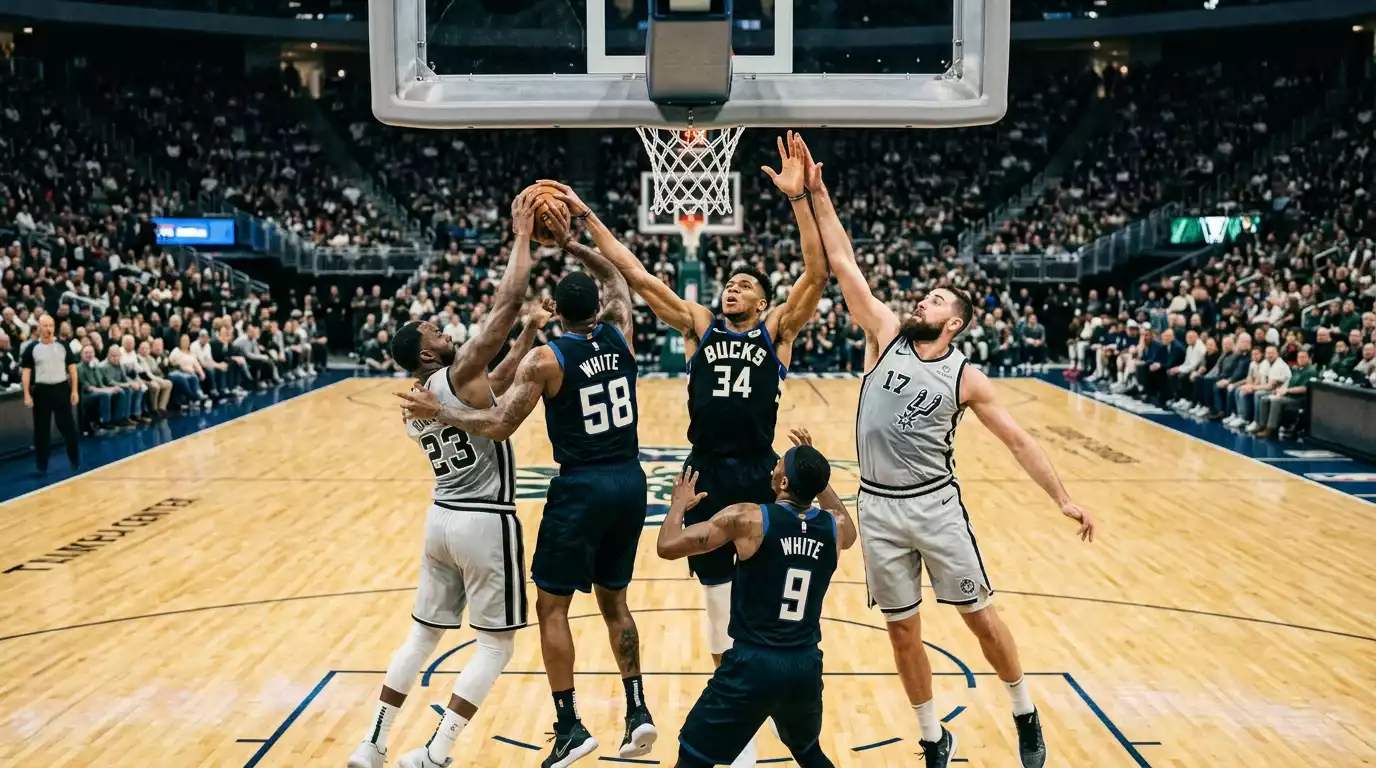
Basketball Over/Under Explained: How Totals Betting Works
 Available in US

The first totals bet I ever placed was on a mid-season NBA game between the Indiana Pacers and the Sacramento Kings — two of the fastest-paced teams in the league at the time. The line sat at 234.5, and I hammered the over without a second thought. The game finished 128-121, clearing the total by 14 points. I felt like a genius. What I didn’t realise then was that the bookmaker had already priced in those teams’ pace, and the line was sharp. I’d won, but I hadn’t found value — I’d just gotten lucky on the right side of variance.
Over/under betting — also called totals betting — asks a single question: will the combined final score of both teams land above or below a number set by the bookmaker? You never need to pick a winner. Basketball, with its high-scoring nature and 15 to 18% share of global sports betting activity, offers some of the most dynamic totals markets in any sport. An NBA game routinely sees 200 to 240 combined points, which creates a wide range of potential outcomes and gives the bookmaker plenty of room to set precise lines.
How the Totals Line Is Set and Settled
I once watched a totals line on a Celtics-Bucks playoff game open at 223.5 and close at 218.5 within six hours — a five-point swing driven entirely by a late injury report. That movement taught me more about how these lines work than any textbook could.
Bookmakers set the totals line using a combination of statistical models, historical data, and real-time inputs. The core inputs include each team’s offensive and defensive efficiency ratings, their pace of play, recent form, rest days, travel schedule, and confirmed lineup information. The opening line reflects the bookmaker’s best estimate of the combined score, and it begins adjusting the moment money starts flowing in.
Settlement is simple. Add both teams’ final scores together. If you bet the over at 221.5 and the game finishes 112-111 (total: 223), you win. If the total is 220, you lose. The half-point eliminates the possibility of a push — a scenario where the total lands exactly on the line and all bets are returned. Some sportsbooks do offer whole-number lines like 222.0, in which case a combined score of exactly 222 results in a push and your stake comes back.
Overtime counts. Every point scored in any overtime period is included in the final total. This matters more than many punters realise. A game heading to OT with a combined score of 210 on a 215.5 line can easily clear the over once an extra five minutes of play adds 20 to 30 points. If you’ve backed the under, overtime is almost always bad news.
NBA generates roughly 60% of all basketball betting revenue worldwide, and totals markets attract a disproportionate share of that volume. The reason is accessibility — you don’t need to evaluate which team is better, only whether the game will be high-scoring or low-scoring. That conceptual simplicity draws in casual punters and experienced analysts alike, though the analytical approaches differ enormously.
For a deeper look at how specific numbers recur in basketball scoring, key numbers in basketball betting covers why certain margins and totals appear more frequently than others.
Team Totals vs Game Totals
Most punters start with game totals and never explore team totals, which is a missed opportunity. I’ve found some of my best edges in team-specific lines over the years.
A game total covers the combined score of both teams. A team total isolates one side — for example, “Boston Celtics over/under 114.5 points.” You’re betting on how many points a single team will score, regardless of their opponent’s output.
The distinction matters because game totals require you to assess both offences and both defences simultaneously. Team totals let you focus on one matchup. If you’ve identified that the Miami Heat’s perimeter defence has been leaking three-pointers over the past ten games, you might back the opposing team’s total over without needing an opinion on whether Miami’s own offence will keep pace.
Team totals also create opportunities around rest and rotation. When a top NBA side rests its star player for load management on the second night of a back-to-back, the team total usually drops by two to four points. If you believe the drop is too steep — perhaps the team’s bench unit has been performing well recently — the over on the adjusted team total can offer value.
From a UK perspective, not every bookmaker offers team totals on every NBA game. The major UKGC-licensed operators typically provide them for marquee matchups and nationally televised games, but coverage can thin out for early-season midweek fixtures between smaller-market teams. If team totals are a focus of your approach, checking market availability across two or three sportsbooks before tip-off is worth the extra minute.
Why Pace and Tempo Drive Over/Under Lines
Back in the 2018-19 season, I made the mistake of ignoring pace data for an entire month. I treated totals as a gut-feel exercise — this team scores a lot, so the game will go over. My results were atrocious. Once I started incorporating pace metrics, the picture sharpened immediately.
Pace, in basketball analytics, measures the number of possessions a team uses per 48 minutes. A team like the 2023-24 Pacers played at one of the highest paces in the league, averaging over 103 possessions per game. The 2023-24 Cavaliers, by contrast, operated closer to 97. When a fast team faces a slow team, the resulting pace typically lands somewhere between the two, and that midpoint directly influences the totals line.
More possessions mean more shots, which means more potential points. But pace alone doesn’t tell you whether a game will go over. You also need to evaluate efficiency — how well each team converts those possessions into points. A high-pace game between two poor offences can produce a lower combined score than a slow-pace game between two elite offences. The intersection of pace and efficiency is where totals analysis actually lives.
Defensive tempo matters too. Some teams deliberately slow the game down when protecting a lead, reducing possessions in the fourth quarter. Others push the pace when trailing, creating fast-break opportunities that inflate the total. These situational dynamics aren’t always fully captured in the opening line, especially when the bookmaker’s model relies heavily on season-long averages rather than recent-form adjustments.
For practical purposes, I look at three data points before placing a totals bet: both teams’ pace over their last ten games, their offensive and defensive ratings over the same window, and the rest/travel context. A team coming off two days’ rest tends to play with more energy and higher efficiency in the first half, which can push the first-half total over independently of the full-game line.
The mobile revolution has made accessing this data easier than ever — over 70% of basketball betting volume now flows through mobile platforms, and most serious totals bettors have pace and efficiency stats open on their phone while watching games. Real-time access to these numbers has compressed the informational edge that sharp bettors once held, but it hasn’t eliminated it entirely. The punter who combines pace data with contextual factors — injury reports, back-to-back scheduling, altitude effects in Denver — still has room to find value that pure model-driven lines miss.
What happens if the total lands exactly on the line?
If the bookmaker sets a whole-number line — say 220.0 — and the combined score finishes at exactly 220, the bet is a push. Your stake is returned in full. Most sportsbooks use half-point lines like 220.5 to eliminate this possibility, ensuring every bet resolves as either a win or a loss.
How does overtime affect an over under bet?
All points scored in overtime count towards the final total. If the game is tied at the end of regulation, the additional period almost always adds 15 to 30 combined points. This heavily favours over bets, since the extra minutes generate possessions and scoring opportunities that would not exist in a regulation-length game.
What is a team total in NBA betting?
A team total is an over/under line set on a single team’s points rather than the combined score of both teams. For example, a line of ‘Los Angeles Lakers over/under 112.5’ asks whether the Lakers will score more or fewer than 112.5 points, regardless of the opposing team’s output.
Prepared by the Basketball Betting Terms editorial staff.