Basketball Player Props Betting: A Practical Guide to Individual Performance Markets
 Available in US

The Market That Rewards Basketball Knowledge Most
I remember the exact moment player props became my primary basketball betting focus. It was January 2021, and a starting centre was listed at 10.5 rebounds against a team that played small-ball lineups exclusively. He had averaged 14.2 boards per game against small-ball opponents over the previous two seasons. The over hit by the middle of the third quarter. That was not luck — it was a straightforward informational edge that the prop market had failed to price correctly.
Player proposition bets — or “player props” — are wagers on an individual player’s statistical output rather than the game’s outcome. Points scored, rebounds collected, assists dished, three-pointers made, steals, blocks, and various combinations of these categories all carry their own lines. The NBA generates roughly 60% of global basketball betting revenue, and props represent the fastest-growing subset of that volume. For bettors who actually understand basketball, these markets offer the widest and most consistent edges available.
Why Props Are Softer Than Game Lines
Have you ever wondered why the sharpest syndicate bettors still focus on sides and totals? It is a matter of liquidity. The main game markets handle enormous volume, and bookmakers invest heavily in getting those lines right. Props, by contrast, are lower-priority. The lines are often derived algorithmically from season averages, with limited manual adjustment. That means the props market does not absorb new information as quickly as the spread or the total.
When a backup point guard is ruled out two hours before tip-off, the game spread might move half a point. But the assists prop for the starting point guard — who now has no secondary ball-handler to share duties with — often stays exactly where it was. The game line adjusts because sharp money forces it to move. The prop line sits because the volume on any single prop is too small to trigger a meaningful correction. This structural inefficiency is not a bug in the market; it is a feature that informed bettors can exploit repeatedly.
The other factor is variance tolerance. Bookmakers accept larger margins of error on props because no single prop represents significant liability. A GBP 50 bet on a player’s rebounds total does not keep any risk manager awake at night. That tolerance translates directly into less precise pricing — and less precise pricing means more value for anyone willing to do the research.
Building a Player Props Research Process
I spent my first six months betting props the wrong way — glancing at season averages, comparing them to the posted line, and betting whenever the average exceeded the line. My results were mediocre. The turning point came when I started treating each prop as a miniature handicapping exercise, considering the specific matchup rather than the broad average.
The process I use now starts with opponent defence. Not the team’s overall defensive rating, but how they defend specific positions and play types. A centre facing a team that allows the third-most points in the paint is a different proposition than that same centre facing a team that funnels everything to the perimeter. I pull defensive splits by position, looking at points allowed, rebounds conceded, and assists permitted to the specific role the player fills.
Pace is the second variable. A game with a projected pace of 104 possessions produces roughly 8% more statistical opportunities than a game projected at 96 possessions. That difference flows directly into counting stats — more possessions mean more shots, more rebounds, more assists. If the prop line is set based on the player’s season average and the season average includes games at both extremes of pace, then a high-pace matchup should push the expected output above the line.
Minutes projection rounds out the core analysis. Rest days, back-to-back schedules, blowout risk, and rotation changes all affect how many minutes a player is likely to see. A star who averages 34 minutes per game but is playing the second night of a back-to-back might see only 30. That 12% reduction in court time drags every counting stat downward proportionally.
Matchup-Specific Edges That Repeat
During the 2024-25 season, I tracked a specific angle that produced consistent returns: backing the rebounds over for athletic power forwards against teams that ranked in the bottom five in defensive rebounding percentage. The logic was simple — poor defensive rebounding teams leave more boards available on the offensive glass, and athletic forwards crash harder when they sense weakness on the boards. Over forty-seven bets on this angle, the over cashed at a 61% rate. At standard -110 juice, that rate generates a clear profit.
Another repeatable edge sits in the assists market. Point guards facing teams with poor perimeter defence tend to penetrate and create more kick-out opportunities. When the defence collapses on dribble penetration, open shooters result, and open shooters convert at higher rates. The assists line for the penetrating guard does not always account for the quality of looks he will generate — it accounts for his average assist rate, which includes games against elite perimeter defences that forced him into isolation scoring instead.
Three-point props carry the highest variance of any player market, and I generally avoid them for single-game wagers. A player who averages 2.8 made threes per game might hit five one night and zero the next. The distribution is too lumpy for single-game edges to overcome the noise. Where three-point props do offer value is in same-game parlay constructions where a correlated set of outcomes reduces the effective variance — but that is an advanced topic requiring its own discussion.
Line Shopping and Timing for Props
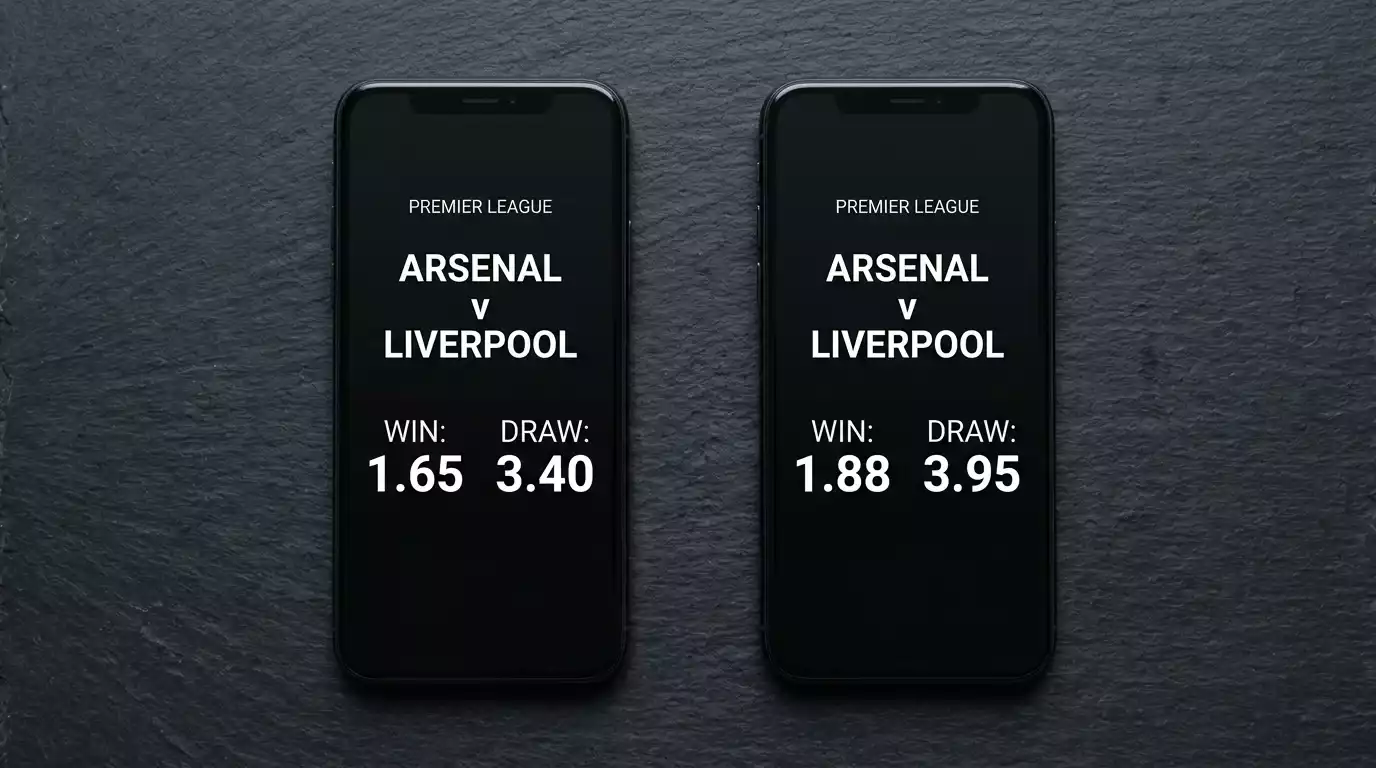
I once found a 1.5-point difference on the same player’s points prop across two UK-licensed operators on the same afternoon. One had the line at 22.5, the other at 24.5. That two-point gap meant the over was a strong bet at one shop and a pass at the other. Props vary more across bookmakers than any other market type, and failing to shop lines is the single most expensive habit in this space.
Timing matters as much as shopping. Props are typically posted the morning of a game, and early lines are often the softest because they are set before the full day’s injury and lineup information is available. If you have a strong read on a matchup, early lines can offer value that disappears by tip-off. Conversely, late-breaking news — a player upgraded from questionable to probable, a rotation change announced during warm-ups — creates value in the opposite direction. The key is knowing which information the market has already absorbed and which it has not.
Keep a spreadsheet of where you find the best prop lines consistently. Over time, patterns emerge. Certain operators are slow to adjust rebounds lines. Others consistently shade points props towards the under. Knowing which book to check first for which prop type saves time and captures value that evaporates within hours.
Managing Risk Across a Props Portfolio
The temptation with player props is to bet ten or fifteen of them per night. The NBA runs a full slate most evenings, and every game offers a dozen or more prop markets. Betting all of them — even the ones with marginal edges — creates a portfolio with high correlation and high variance. If the league trends towards low-scoring games on a given night (which happens more often than you might expect), every points over you hold suffers simultaneously.
I cap my nightly prop exposure at four to six bets, each at 1% of bankroll. That constraint forces me to rank my edges and take only the strongest. It also limits correlation — I try to avoid stacking multiple props from the same game unless they are genuinely uncorrelated (a points over on one player and a rebounds over on an opponent, for example). The basketball betting market worldwide was projected to grow at a compound annual rate of 8.7% through 2033, and much of that growth concentrates in props. More volume will eventually tighten these lines, so the window for easy edges will not last forever. Use it wisely while it exists.
Track your results by prop type, not just overall. You might discover that your assists analysis is sharp but your rebounds handicapping is mediocre. Knowing where your edge actually lives allows you to concentrate capital there and cut the categories where you are essentially flipping coins. Data-driven self-assessment is not glamorous, but it is the difference between a profitable props bettor and someone who feels busy without making money.
What are the most common basketball player props?
Points scored, total rebounds, assists, three-pointers made, and combined stats like points plus rebounds plus assists. Some operators also offer props on steals, blocks, turnovers, and minutes played, though liquidity on those markets tends to be thinner.
Are player props harder to beat than game spreads?
They are generally easier to beat. Game spreads attract sharp money that keeps lines efficient, whereas props receive less sophisticated volume and are priced more mechanically. The trade-off is lower betting limits and wider juice on props at most operators.
Prepared by the Basketball Betting Terms editorial staff.