Live Basketball Betting: In-Play Markets, Micro-Bets, and Real-Time Strategy
 Available in US
Table of Contents
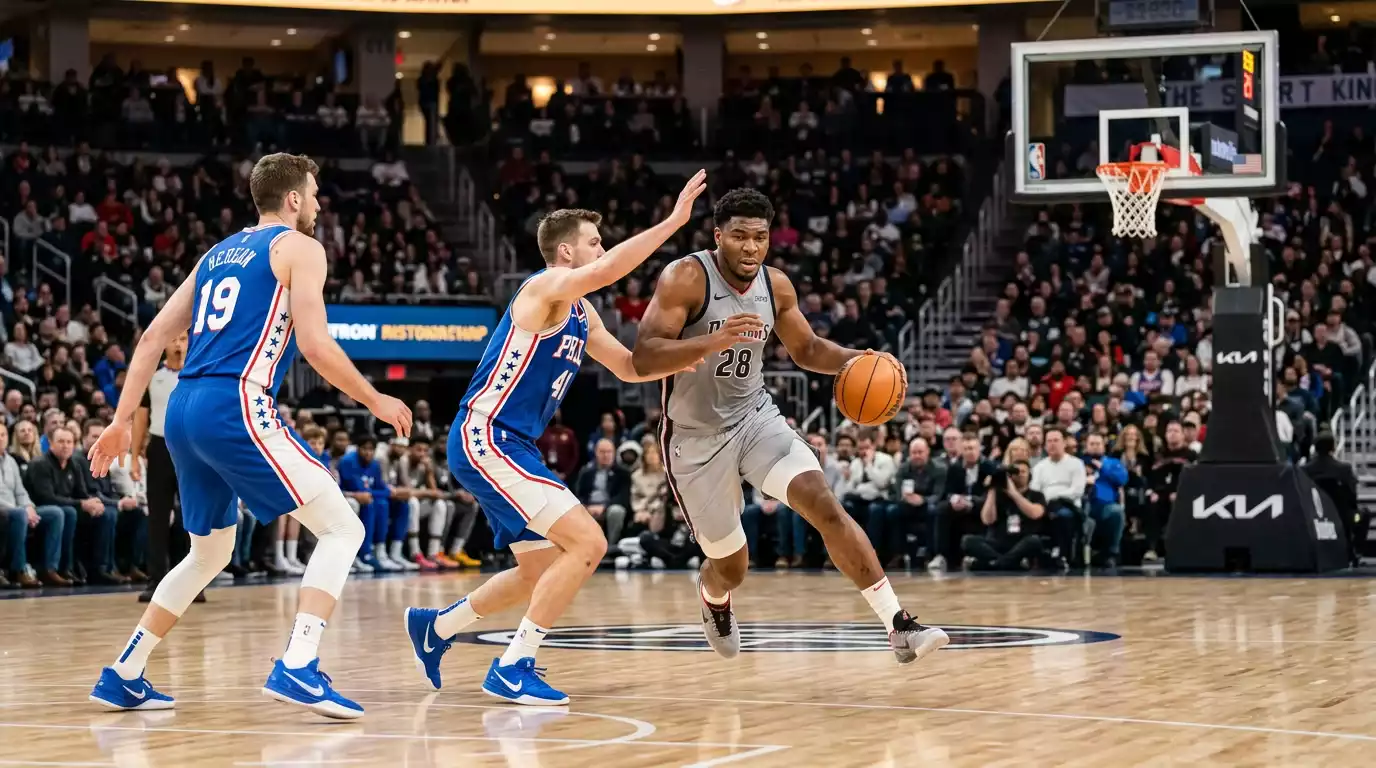
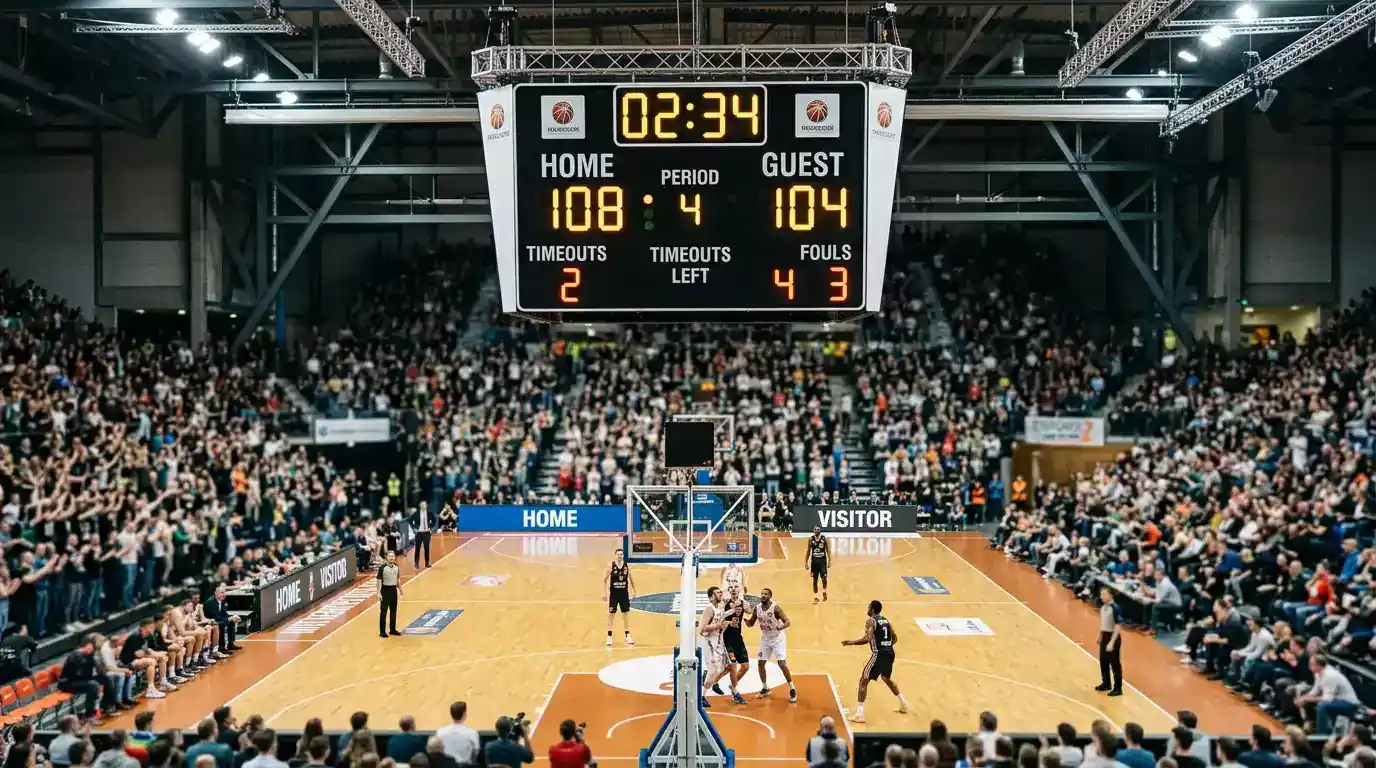
The best live bet I ever placed happened because I was watching a game most people had already written off. The Mavericks were down 18 in the third quarter, the in-play spread had ballooned to +14.5, and I noticed something the algorithm had not priced in: the opposing team’s starting centre had just picked up his fourth foul. The Mavericks went on a 22-6 run over the next seven minutes. I backed them at +14.5 and cashed comfortably. That is the promise of in-play basketball betting — information you can see with your eyes reaches you faster than it reaches the model.
Live betting now accounts for a dominant share of online sports wagering globally. In-play wagers made up 62.35 percent of the online sports betting market in 2025, growing at a compound annual rate of 13.62 percent and projected to keep climbing through 2031. By 2026, live betting reached 53.40 percent of all online betting activity by another measure. Whichever data point you prefer, the conclusion is the same: in-play betting is not a niche feature. It is the primary way people bet on sport, and basketball — with its continuous scoring, frequent stoppages, and momentum swings — is the ideal sport for it.
This guide covers how in-play basketball betting works from a UK perspective, the specific live markets available, the emerging world of rapid-fire micro-bets, cash-out mechanics, and the strategic framework I use to find edges during a live NBA broadcast. Nine years of watching games with a live betting screen open has taught me that the real money is made between quarters, not before tip-off.
How In-Play Basketball Betting Works
Pre-match betting gives you one shot: you assess the game beforehand, place your bet, and wait. In-play betting is a continuous conversation with the market. Odds update in real time as the game unfolds, reflecting scoring, fouls, injuries, momentum shifts, and time remaining. You can enter and exit positions throughout the game, reacting to what you see rather than what you predicted hours earlier.
The mechanics are straightforward. Once a game tips off, the bookmaker’s in-play algorithm recalculates the spread, total, and moneyline after every significant event — a made basket, a foul, a timeout, a substitution. The odds you see at any moment reflect the algorithm’s assessment of the remaining game state. If the Celtics lead by 10 at half-time, the live spread might show Celtics -4.5 for the second half, implying the algorithm expects them to win the remaining 24 minutes by about 4 to 5 points.
There is a critical time delay to be aware of. UK bookmakers introduce a latency buffer — typically a few seconds — between the event happening and the odds updating. This delay protects the bookmaker from bettors who are watching a live feed that runs ahead of the data the algorithm processes. If you are watching on a stream with minimal delay, you might see a basket scored before the odds adjust. Some bookmakers reject or void bets placed in that window. Others accept them but will restrict your account if they detect a pattern of exploiting the lag. That cat-and-mouse dynamic is a fundamental feature of in-play betting, and being aware of it prevents unpleasant surprises.
For UK punters, the time-zone factor is significant. Most NBA games tip off between 11pm and 3:30am UK time. Live betting on basketball is therefore a late-night activity, which affects the quality of your decision-making. I have a personal rule: if I am too tired to track the game attentively, I do not bet in-play. Tired bettors make impulsive decisions, and impulsive in-play decisions compound faster than pre-match mistakes because the market moves continuously.
The volume of in-play betting on a single NBA game is substantial. A high-profile matchup might see hundreds of thousands of individual bets placed during the broadcast, across dozens of markets updating simultaneously. That liquidity means the odds are relatively efficient on standard markets like the live spread and total — the algorithm has been trained on thousands of historical games and is constantly refined. But it also means that when the algorithm gets something wrong — misjudging the impact of a lineup change or a tactical adjustment — the mispricing gets corrected quickly. Speed of execution matters. If you spot a value discrepancy, you have seconds, not minutes, to act on it before the line adjusts.
Live Markets: Quarter Lines, Next Basket, and Race To
The NBA’s real-time player-tracking data partnership has transformed what bookmakers can offer during a live game. Before that data existed, in-play markets were limited to updated spreads, totals, and moneylines. Now, the menu expands into territory that would have seemed absurd a decade ago.
Quarter lines are the bread and butter of live basketball betting. At the start of each quarter, the bookmaker posts a spread and total for that specific period. A fourth-quarter spread of -1.5 means the bookmaker expects one team to edge the final 12 minutes by about 2 points. These quarter lines are less efficiently priced than full-game lines because the volume is lower and the variance is higher — a single three-pointer or a foul-trouble-driven substitution can swing a quarter’s outcome. That inefficiency is where I find most of my in-play value.
“Next basket” props let you bet on which team scores the next points. The odds shift dynamically based on possession, shot clock, and court position. “Race to” markets ask which team will reach a points threshold first — race to 20, race to 50, race to 100. These are pace-sensitive: in a fast-paced game, both teams reach milestones quickly, and the race-to lines reflect the scoring tempo. In a grind, the race-to markets stretch out, and the unders on scoring milestones become more attractive.
Alternative live totals offer another angle. As the game progresses, the bookmaker adjusts the overall game total based on the current score and the expected scoring rate for the remaining time. If the first quarter of a game projected to total 220 finishes at 62-58, the live total for the game might shift to 228 or higher, because the pace has exceeded pre-match expectations. Spotting when the live total overreacts to a high-scoring opening quarter — because the pace is unlikely to sustain — is one of my favourite in-play angles.
Half-time betting deserves special mention. During the half-time interval, bookmakers repost a full set of lines for the second half — spread, total, moneyline, and sometimes player props. This is the most deliberate in-play betting opportunity because you have 15 to 20 minutes to assess first-half performance, check lineup adjustments, and make a considered decision without the pressure of real-time scoring. I treat half-time as a reset point and approach second-half betting with the same rigour I apply to pre-match analysis.
Next Play Markets and Rapid-Fire Odds
Micro-betting is the frontier — and possibly the most controversial development in basketball wagering. These are bets that resolve within seconds or minutes: “next player to score,” “will this free throw go in,” “total points in the next two minutes.” The odds refresh every 200 to 500 milliseconds, driven by player-tracking sensors embedded in arenas and fed directly into the bookmaker’s pricing engine.
Mobile devices now account for over 80 percent of online gambling revenue in the US and over 53 percent globally. Micro-betting is designed for that mobile-first audience — quick decisions, instant resolution, and an addictive feedback loop that keeps the bettor engaged possession by possession. The technology behind it is genuinely impressive: optical tracking cameras capture player movement at 25 frames per second, and the data pipeline from camera to odds engine to your phone screen takes less than a second.
The edge for bettors in micro-markets is narrow but real. The algorithm prices these bets based on statistical models that ingest the tracking data, but the models cannot fully capture situational context. If a team is running a designed play out of a timeout, and you have watched this team run that exact play 50 times this season, you might know which player will get the ball before the model does. That informational edge is small and fleeting, but it exists — and it is the reason some sharp bettors have gravitated toward micro-markets despite the frenetic pace.
The risk, however, is real. The speed of micro-betting — dozens of potential bets per quarter, each resolving in seconds — creates a volume of decisions that overwhelms disciplined bankroll management. For a complete analysis of how these rapid-fire markets are reshaping the landscape, my piece on micro-betting in basketball covers the technology, the risks, and the integrity concerns in depth. I will say this plainly: micro-betting is not for everyone, and if you tend toward impulsive decisions, it is a market worth avoiding entirely.
Cash Out and Partial Cash Out in Basketball
Cash out lets you close a bet before the game ends, locking in a profit or cutting a loss based on the current in-play odds. It is the in-play equivalent of selling a stock — you decide the market has moved enough in your favour (or against you) and you take the money on the table.
Here is a worked example. You bet 20 pounds on the Nuggets -3.5 at 1.91 before tip-off. At half-time, the Nuggets lead by 12, and the live line has shifted dramatically in their favour. Your bookmaker offers you a cash-out value of 33 pounds — a 13-pound profit, compared to the 18.20 you would win if the bet runs to completion and the Nuggets cover. You are trading certainty (13 now) for uncertainty (18.20 if they hold the lead and cover, zero if they collapse).
Partial cash out splits the difference. Instead of cashing the full bet, you cash out, say, 50 percent and let the other 50 percent ride. This is the option I use most often in live basketball betting, because NBA games are volatile enough that a 12-point half-time lead is far from safe, but it is strong enough that walking away entirely feels premature.
The catch with cash out is the bookmaker’s margin. The cash-out value offered is always less than the theoretical value of your position, because the bookmaker applies a margin to the in-play odds used in the calculation. That margin varies by platform and by sport, but in my experience it ranges from 3 to 8 percent on basketball. You are paying a fee for the convenience of early settlement. Whether that fee is worth the peace of mind depends on your risk tolerance, the size of the lead, and the time remaining — a 12-point lead with 2 minutes left is much safer than a 12-point lead with 18 minutes left.
In-Play Strategy: Momentum, Foul Trouble, and Pace
John Affleck, the Knight Chair in Sports Journalism and Society at Penn State, has pointed out that in-play markets make even the most minor in-game events — a first-half foul call, a single made three — potentially significant for bettors. That observation captures the strategic challenge perfectly: in-play betting rewards attention to detail that pre-match betting does not.
Momentum is the first thing I track. Basketball momentum is real but overrated by the public and underrated by algorithms. When a team goes on a 12-0 run, the in-play algorithm adjusts the line sharply — sometimes too sharply, because it extrapolates the run into future performance. In reality, momentum in basketball is mean-reverting. A 12-0 run is often followed by a cooling period as the trailing team adjusts. If the algorithm has swung the spread by 8 points during the run, there may be value on the other side as the game stabilises. I have built my in-play approach around fading extreme momentum shifts in the second and third quarters, when the game still has enough time for regression to do its work.
Foul trouble is the second factor. When a star player picks up his third or fourth foul early, the coaching staff benches him to protect him for later. His absence changes the team’s offensive efficiency, defensive rating, and pace — all of which ripple through the in-play lines. Mobile platforms handle the vast majority of basketball betting volume, meaning most bettors are watching the score on their phone, not the game on a screen. They do not see the foul-trouble substitution. You do, if you are watching the broadcast. That informational advantage — knowing that a key player is on the bench for foul management — is one of the most reliable in-play edges available.
Pace changes are the third element. Some NBA coaches deliberately slow the pace in the fourth quarter when protecting a lead — longer possessions, more clock management, fewer transition opportunities. That pace compression lowers the expected scoring for the remaining period and affects live totals and quarter lines. If the fourth-quarter total is set at 52.5 but the team with the lead is likely to grind the clock, the under becomes attractive. I check the pace differential between the first three quarters and adjust my fourth-quarter expectations accordingly.
Overtime presents a unique in-play opportunity. When a game enters overtime, the bookmaker posts entirely new lines for the five-minute extra period. Overtime is a high-variance environment — key players might be in foul trouble, fatigue is a factor, and the sample size of possessions is small. The market is thin, which means the odds can be less efficient than in regulation. I have found that teams with deeper rotations and fresher legs tend to outperform in overtime, and that is a factor the live algorithm does not always weight heavily enough. If the game goes to overtime and one team clearly has the conditioning advantage, the live spread for the extra period can be mispriced.
Live Basketball Betting Platforms Available in the UK
The UK online gambling segment generated 7.8 billion pounds in gross gambling yield in the year to March 2025, and live betting on basketball is a growing contributor to that figure — though still dwarfed by football. The practical question for UK punters is not whether live basketball betting exists on their platform, but how deep the coverage goes.
Most major UK-licensed bookmakers offer live spreads, totals, and moneylines on NBA games. Quarter lines and half-time markets are available on a majority of platforms for nationally televised games, with thinner coverage on lower-profile matchups. Player props during live play are less common — some platforms offer updated points and rebounds lines at quarter breaks, while others restrict props to pre-match only.
Speed and interface matter. A live betting platform that takes five seconds to load a new market is useless when the odds are shifting every few seconds. I have tested the mobile apps of the major UK bookmakers for in-play basketball, and the variance in responsiveness is significant. Some apps update odds almost instantly during stoppages; others lag noticeably, which means the price you see is not the price you get. If in-play basketball is going to be a regular part of your betting, spend a week trialling the live interface of two or three platforms before committing your volume to one.
One final consideration: streaming. Some UK bookmakers offer live NBA streams directly within their app, which eliminates the need for a separate broadcast subscription. The streams typically run a few seconds behind the real-time arena action, but they are synchronised with the bookmaker’s odds feed — meaning what you see on screen and what you see on the bet slip are aligned. For punters who plan to bet in-play, an integrated stream removes the risk of acting on delayed information from a third-party broadcast.
Frequently Asked Questions
How quickly do in-play basketball odds change?
In-play odds on standard markets like spread and total update after every significant event — made baskets, fouls, timeouts, and substitutions. On micro-betting markets, odds can refresh every 200 to 500 milliseconds. During fast-paced sequences, the odds may shift multiple times within a single possession.
Can you combine live bets into an accumulator?
Most UK bookmakers allow you to combine live selections from different games into an in-play accumulator. However, combining multiple live selections from the same game into a same game parlay during play is more restricted — some platforms disable bet builders once a game tips off, while others offer a limited live bet builder.
What is cash out and when should you use it?
Cash out lets you settle a bet early at a value calculated from the current in-play odds. Use it when the potential profit on offer is sufficient relative to the remaining risk. As a guideline, cash out becomes more attractive the closer the game is to ending and the more volatile the remaining situation — for example, a slim lead with heavy foul trouble.
Which UK bookmakers offer micro-betting on NBA games?
Micro-betting availability in the UK is still limited compared to the US market. A small number of UK-licensed platforms offer rapid-fire markets like next basket scorer and two-minute scoring windows on select NBA games, typically marquee matchups and playoffs. Availability is expanding as player-tracking data becomes more widely licensed.
Created by the ”Basketball Betting Terms” editorial team.