Basketball Live Betting Strategy: How to Find Value During the Game
 Available in US
Why the Real Action Starts After Tip-Off
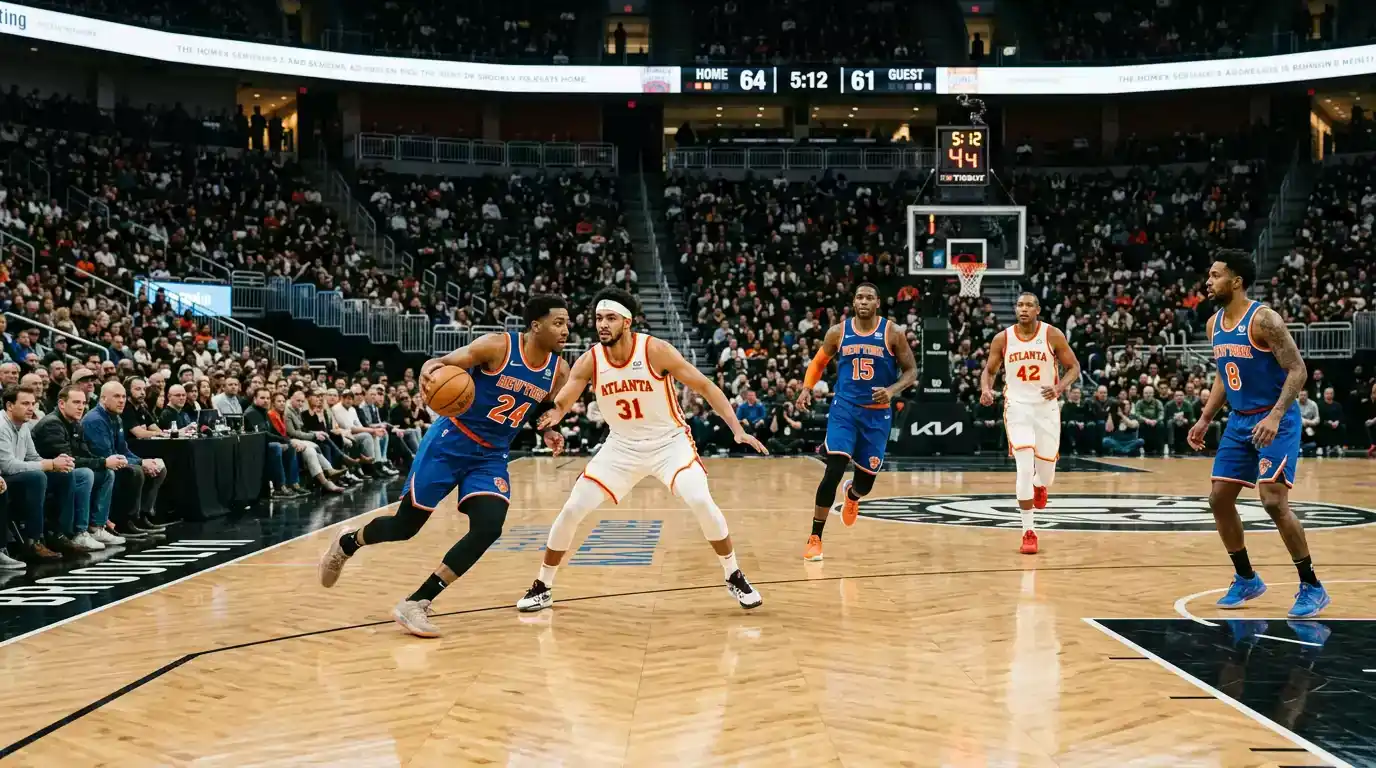
I placed my first live basketball bet during a 2019 NBA playoff game — Golden State trailed by fourteen points in the third quarter, and the in-play moneyline had them at +380. They won by six. That single bet taught me more about market dynamics than months of pre-game wagering ever had. Since then, in-play basketball has become the core of my betting activity, and for good reason: the inefficiencies are larger and more frequent than anything you will find before the opening whistle.
Live betting — sometimes called in-play or in-running betting — allows you to place wagers while a basketball game is happening. Odds shift in real time based on the score, momentum, fouls, and dozens of other factors. The global basketball betting market sits at roughly $8.7 billion as of 2024, and the in-play segment is growing faster than any other category. Mobile wagering now generates over 80% of online gambling revenue in the United States alone, and much of that volume is in-play. For UK punters, this is the sharpest edge available in basketball betting right now.
How In-Play Odds Actually Move
A friend once asked me why live spreads seemed so erratic during an NBA game. The answer is deceptively simple — and understanding it is the foundation of every profitable in-play strategy. Pre-game odds are built on hours of modelling, injury reports, and market consensus. Live odds are built on algorithms reacting to events in near-real-time. That speed creates gaps.
Most bookmakers use automated pricing models for in-play basketball. These models process the current score differential, time remaining, pace of play, and foul counts to generate updated odds every few seconds. The problem is that algorithms weight recent scoring runs too heavily. A team goes on an 8-0 run over ninety seconds, and the live spread swings three or four points — even if the run came from transition baskets off turnovers that are unlikely to continue at the same rate. The model sees the score change; it does not see the context.
This over-reaction is your opportunity. When a strong favourite falls behind early because of a cold shooting stretch, the live odds often overcorrect. The favourite’s true win probability might drop from 72% to 65%, but the market prices them as if it has dropped to 55%. That mismatch between perceived probability and actual probability is where value lives. Recognising these moments requires watching the game, not just the scoreboard — and it rewards punters who understand basketball rather than those who simply chase numbers.
Three Situations Where Live Markets Overshoot
I keep a running log of in-play bets, and after reviewing roughly two thousand entries, three patterns account for most of my positive expected value. They are not secrets — anyone watching enough basketball will notice them — but the discipline to act on them consistently separates profitable bettors from the rest.
The first pattern is the early deficit overreaction. NBA teams that trail by ten or more points at the end of the first quarter still win roughly 20-22% of the time. That is far more often than the live odds typically suggest. If a top-eight team in offensive efficiency falls behind early against a bottom-ten defence, the live moneyline regularly drifts to prices implying a 12-15% win probability. That gap of five to seven percentage points, compounded over dozens of bets, produces a meaningful edge.
The second pattern involves foul trouble for star players. When a team’s best player picks up two early fouls and heads to the bench, the live spread often moves two to three points beyond what his absence actually costs in terms of net rating differential. The market treats the player as if he is out for the game, when in reality he will return in the second half with adjusted minutes. Coaches manage foul trouble; algorithms do not always account for that management.
The third pattern is the third-quarter momentum trap. NBA home teams outscore visitors in the third quarter more consistently than in any other period. Yet the halftime live odds rarely build in enough of a premium for this effect. Backing home underdogs at halftime, specifically those trailing by single digits, has been a quietly profitable angle for years.
Reading the Game Beyond the Box Score
Last season I watched a EuroLeague match where the trailing team was shooting 28% from three-point range at half-time. Their live odds had ballooned to reflect that shooting. But I could see their shot quality was excellent — open looks, good rhythm, clean releases. Shot quality regresses to the mean faster than most bettors expect. I backed them at the break, and they shot 45% from three in the second half to cover the spread comfortably.
Watching the game is not optional for serious live bettors. You need to see whether a team’s misses are contested or open. You need to notice whether a coach has switched to a zone defence, which changes pace and scoring patterns. You need to register when a team is deliberately slowing down or speeding up. None of this information shows up in the live stats feed that bookmakers’ algorithms consume.
The specific things I track during a game: turnover quality (live-ball turnovers lead to fast breaks and runs; dead-ball turnovers do not), free-throw rate trends (a team attacking the rim consistently will eventually draw fouls and get to the line), and bench rotation patterns (fresh legs in the fourth quarter matter enormously in the NBA’s 82-game season). These qualitative observations, layered on top of the quantitative live data, form the basis of every in-play decision I make.
Practical Execution and Timing
Knowing where the value is means nothing if you cannot execute the bet before the odds shift. I learned this the hard way during my first year of live betting, when I missed profitable windows by thirty seconds because I was still deliberating. Speed matters, but so does preparation.
Before any game I intend to bet in-play, I set conditional triggers. For example: “If Team A trails by 8+ at any point in the first half, I will bet their moneyline at +200 or better for 2% of my bankroll.” These pre-set rules eliminate the deliberation time that kills live betting edge. You are not making decisions in the moment — you made them before the game started, based on research. The live action simply tells you when to execute.
Latency is the other execution factor. The time between you clicking “place bet” and the bookmaker accepting your wager can be anywhere from one to five seconds. During that window, odds might move. Some operators reject bets if the price moves against them during the acceptance delay — a practice known as bet rejection or re-quoting. Choose platforms with low latency and transparent acceptance policies. Using a stable internet connection on a dedicated device is not paranoia; it is standard operating procedure for anyone who treats mobile basketball betting as more than casual entertainment.
Bankroll Discipline for In-Play Wagering
I have seen sharp bettors blow six months of profits in a single evening of undisciplined live betting. The pace of in-play markets is intoxicating — there is always another opportunity, another swing, another price that looks too good to pass up. Without strict bankroll rules, the volume of bets escalates until variance overwhelms any edge you might have.
My personal framework caps live bets at 1-2% of total bankroll per wager, with a session limit of five bets per game. That number might sound restrictive, but it forces selectivity. If you are placing more than five in-play bets on a single basketball game, you are almost certainly betting on noise rather than signal. The global online gambling gross gaming yield hit GBP 7.8 billion in the UK alone for the year to March 2025, and a meaningful portion of that comes from punters who overtrade in live markets. Do not contribute to that statistic.
Tracking results is equally important. I log every live bet with the timestamp, the live score at the time of the bet, my reasoning, and the outcome. After a hundred bets, patterns emerge — both in the market and in my own biases. Maybe I consistently overvalue first-quarter deficits, or maybe I am too slow to act on foul-trouble opportunities. The data tells you what your instincts will not.
Where In-Play Basketball Is Heading
Five years ago, live basketball betting was a niche within a niche. Today it is the fastest-growing segment of a market projected to reach $18.4 billion by 2033. The technology driving it — real-time data feeds, low-latency platforms, and increasingly sophisticated pricing models — improves every season. For bettors, that means the easy inefficiencies will shrink over time. The algorithms will get better at pricing momentum shifts, foul trouble, and shooting variance.
But the fundamental advantage of watching the game will not disappear. Algorithms process data; they do not understand basketball. They cannot see a player favouring his left ankle after a hard landing, or a team’s body language shifting after a controversial call, or a coach drawing up a play during a timeout that changes the defensive scheme entirely. As long as live betting models rely on statistical inputs rather than visual context, there will be edges for bettors who put in the time to watch and think. The punters who thrive in in-play markets over the next decade will be those who combine analytical preparation with real-time observation — and the discipline to act only when the gap between price and probability is wide enough to matter.
Is live betting on basketball legal in the UK?
Yes. Live or in-play betting on basketball is fully legal and regulated in the UK under the Gambling Act 2005. All licensed operators offer in-play markets on NBA, EuroLeague, and other basketball competitions.
How quickly do live basketball odds change?
Odds can update every few seconds during active play. Major events like scoring runs, fouls on key players, or timeouts trigger the largest and fastest adjustments. Algorithms reprice continuously based on score, time, and pace data.
What is the biggest mistake beginners make with live basketball betting?
Chasing losses during a single game. The fast pace of in-play markets tempts bettors to place too many wagers without a clear edge, which compounds variance and erodes bankroll. Setting strict per-game bet limits before tip-off is the simplest fix.
Written by the editors at Basketball Betting Terms.