Bad Beat in Basketball Betting: Backdoor Covers, Garbage Time, and Coping
 Available in US
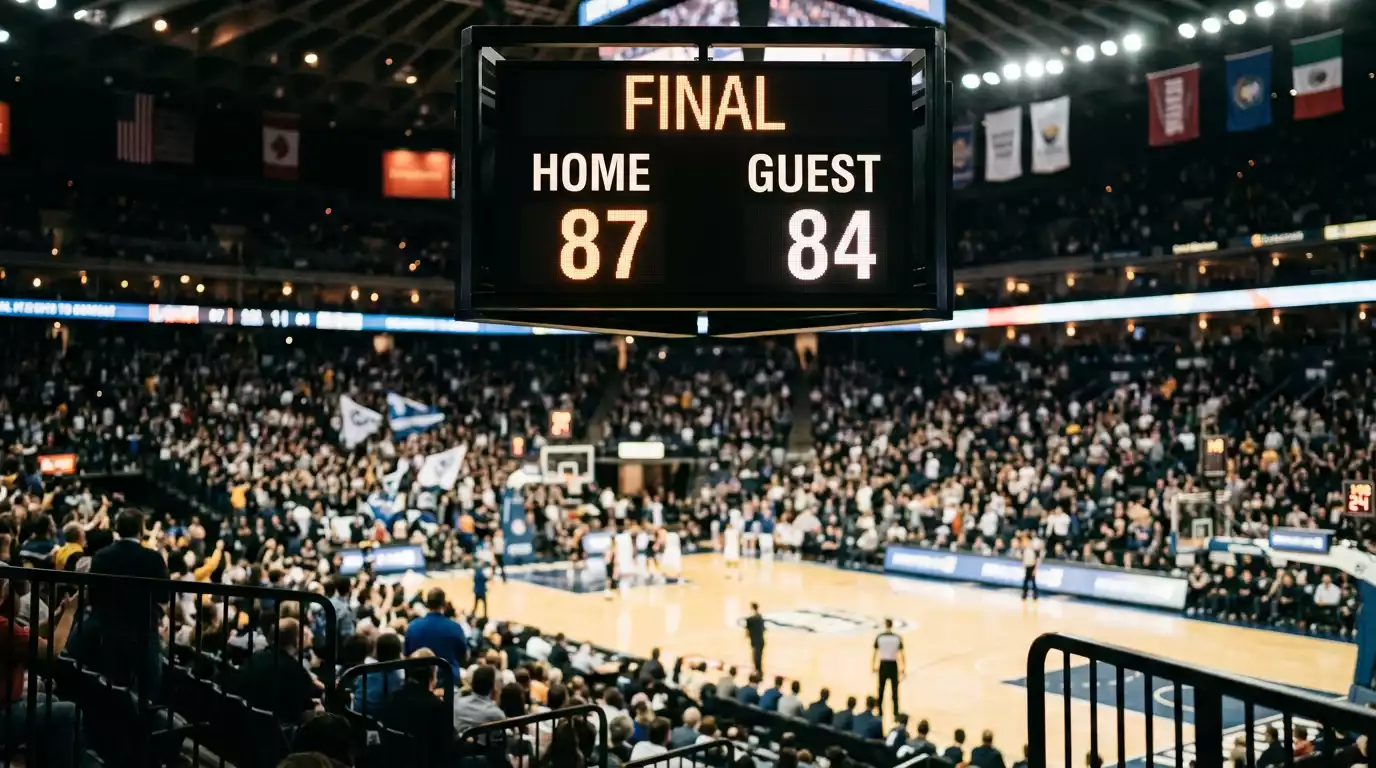
February 2023. I had the Nuggets -7.5 against the Thunder, and Denver led by 14 with ninety seconds remaining. The game was over. I was already calculating my next bet. Then Oklahoma City’s bench unit hit three consecutive three-pointers in garbage time while Denver’s starters sat on the bench in tracksuits. Final margin: five points. My bet lost by half a point. I sat on my sofa in complete silence for about three minutes, contemplating every decision that had led me to this moment. That was a bad beat — and if you bet on basketball long enough, you will experience dozens of them.
A bad beat is a bet lost through an improbable late-game sequence that overturns what appeared to be a certain outcome. It’s not the same as simply losing a bet. Losing is routine. A bad beat is the specific kind of loss that makes you question the fundamental fairness of the universe. And in basketball — with live betting comprising over 62% of the online sports betting market — these moments happen in real time, with your money visibly evaporating in front of your eyes.
Common Bad Beat Scenarios in NBA Betting
After nine years of tracking my own results and discussing losses with other punters, I’ve categorised the most common bad beat scenarios in NBA basketball betting. They repeat with depressing regularity.
The backdoor cover is the most frequent and most infuriating. You’ve bet on the favourite at -6.5. They lead by 15 with two minutes left. The starters sit. The opposing team’s reserves hit a couple of shots, make a run, and the final margin lands at 6. Your bet loses by half a point on action that had zero competitive significance. The players on the court during those final two minutes were mostly guys fighting for roster spots, not trying to win the game — but their output moved the spread.
The garbage-time three-pointer is a subset of the backdoor cover, but it deserves its own mention because it happens so often. A trailing team, down 12 with 30 seconds left, launches a meaningless three-pointer that goes in. The final margin drops from 12 to 9. If you had the favourite at -9.5, you’re fine. If you had them at -10.5, that single shot — which changed nothing about the game’s outcome — killed your bet.
The intentional foul sequence creates bad beats on totals. A team leading by three in the final 30 seconds gets intentionally fouled. They make both free throws, going up five. The trailing team hits a quick three. They foul again. Two more free throws. Another three-point attempt. This end-of-game ritual can add 8 to 12 points to the combined score in under a minute, pushing a game that was tracking under the total to finish over — or vice versa, if the foul shots are missed.
Overtime bad beats are particularly cruel. You bet the under at 221.5. The game heads into regulation at 100-100, total 200. Comfortable. Then overtime produces 30 combined points, and the final total is 230. Your under bet, which was winning for 47 of the game’s 48 regulation minutes, dies in the extra period.
Each of these scenarios shares a common feature: the bet was correct based on the competitive portion of the game. The loss was caused by non-competitive action — garbage time, fouling strategy, or an additional period that the bet’s logic didn’t anticipate. That’s what makes bad beats psychologically difficult: the analysis was sound, but the outcome was determined by factors outside the analytical frame.
The Psychological Impact and How to Manage It
I won’t pretend bad beats don’t affect me. They do. The question isn’t whether you’ll feel the sting — it’s whether you’ll let that feeling influence your next bet. And that distinction separates punters who survive long-term from those who blow up their bankrolls chasing the perceived injustice of a bad beat.
The immediate psychological response to a bad beat is tilt — an emotional state where frustration overrides rational decision-making. Tilt manifests as increased bet frequency (“I need to get that money back”), increased bet sizing (“I’ll double up on the next game”), and decreased analytical rigour (“I don’t care about the matchup, just give me a bet”). Every one of these responses amplifies the damage. A single bad beat costs you one bet; the tilt that follows can cost you ten.
Roughly 450 million people worldwide experience some form of gambling-related harm. Bad beats don’t cause gambling problems on their own, but the tilt response — chasing losses, escalating stakes, abandoning discipline — is one of the pathways through which recreational betting can slide into harmful patterns. Being aware of that pathway is the first step in preventing it.
Senator Thom Tillis voiced a blunt concern about the cumulative impact of betting frustrations: all these scandals, he said — people are going to get tired of it and move on. His comment was about integrity, not bad beats, but the sentiment captures something relevant: repeated negative experiences erode the enjoyment of sports betting. If bad beats are making the activity feel more like suffering than entertainment, that’s a signal worth listening to.
My practical response protocol after a bad beat has three steps. First, I close the betting app for at least 30 minutes. No exceptions. Second, I log the bet in my tracking spreadsheet with a “bad beat” tag, which lets me review these outcomes at the end of the month and confirm that they were genuinely unlucky rather than analytical errors I’m rationalising. Third, I don’t place another bet until the next day. That 24-hour cooling-off period is the single most effective anti-tilt measure I’ve found.
Long-term, the antidote to bad beats is disciplined bankroll management. If your unit size is 2% of your bankroll, a bad beat costs you 2%. It stings, but it doesn’t threaten your ability to continue betting. If your unit size is 10%, a bad beat takes a meaningful chunk — and two in a row can create a psychological spiral that’s hard to exit. The punters who handle bad beats best aren’t the ones with the thickest skin. They’re the ones whose stakes are sized so that no single loss feels catastrophic.
What is a backdoor cover in basketball?
A backdoor cover occurs when the trailing team scores late in a game — often during garbage time when the outcome is already decided — and the final margin shifts to cover the point spread for the underdog. If the favourite was favoured by 7.5 and the underdog’s bench players hit late shots to cut the margin to 6, the underdog has backdoor covered the spread despite never being competitive in the game.
Should you change your betting strategy after a bad beat?
No. A bad beat is a variance event, not an analytical failure. If your process — your selection criteria, your line analysis, your bankroll management — was sound before the bad beat, it remains sound after. Changing strategy in response to an unlucky outcome is a form of results-oriented thinking that typically makes your approach worse, not better. Log the beat, take a break, and return to your established process.
How common are bad beats in basketball compared to football?
Bad beats are more common in basketball than in football due to the higher number of scoring events and the game’s end-of-game fouling dynamics. A football match might produce one or two late goals in injury time; an NBA game can produce 10 to 15 points of scoring in the final two minutes through free throws, garbage-time shots, and intentional fouls. The volume of late-game scoring creates more opportunities for margins and totals to shift unexpectedly.
Created by the ”Basketball Betting Terms” editorial team.