Responsible Gambling for Basketball Bettors: UK Protections and Resources
 Available in US
I’ve written about odds, strategies, and market analysis for years, but this might be the most important piece I’ve put together. I’ve watched friends — sharp, intelligent people who understood the maths perfectly well — lose control of their betting habits during an NBA season. The progression was always the same: increased stakes, chasing losses, betting games they hadn’t analysed, and eventually betting just to feel something. If you recognise even a fragment of that pattern in yourself, this article is for you.
Roughly 450 million people worldwide experience some form of gambling-related harm, with about 80 million meeting clinical criteria for a gambling disorder. Basketball betting, with its near-nightly schedule during the NBA season and late-night UK tip-off times, creates an environment where habitual betting can escalate quickly. The UK has built a regulatory framework specifically designed to provide tools and protections. Using them isn’t a sign of weakness — it’s the same kind of risk management that every serious bettor applies to their bankroll.
How the UK Gambling Commission Protects Bettors
When I first started betting on basketball from the UK, I barely thought about regulation. The sportsbook worked, the odds were fair, and my money was safe. It took a conversation with a former UKGC compliance officer to understand just how much infrastructure sits behind that simple experience.
The UK Gambling Commission is the regulatory body that licences and oversees all legal gambling operators in Great Britain. Every bookmaker where you place a basketball bet must hold a UKGC licence, which imposes obligations around fair play, advertising standards, data protection, and — critically — customer protection. Operators who fail to meet these standards face enforcement action.
The scale of that enforcement has increased sharply. The UKGC conducted 9,700 compliance actions in the 2024-25 period, more than double the 4,200 actions recorded in 2023-24. Those actions range from formal warnings and licence conditions to financial penalties and, in the most serious cases, licence revocation. For punters, this escalation means the operators you bet with are under more scrutiny than ever before, and the cost of non-compliance has risen accordingly.
In 2025, the UK introduced a statutory levy of GBP 100 million on gambling operators to fund research, prevention, and treatment of gambling-related harm. This replaced the previous voluntary contribution system, which critics argued allowed operators to underfund harm reduction programmes. The levy ensures a consistent, mandatory flow of resources to organisations that support people experiencing gambling problems — funded directly by the industry that creates the risk.
For a detailed look at how UKGC licensing applies specifically to basketball betting operators, including compliance trends and enforcement patterns, the UKGC and basketball betting guide covers the regulatory landscape in full.
Deposit Limits, Reality Checks, and Self-Exclusion
Every UKGC-licensed sportsbook is required to offer you these tools. I use deposit limits myself — not because I have a problem, but because removing the decision in the moment is far more effective than relying on willpower when I’m three bets into a losing Friday night.
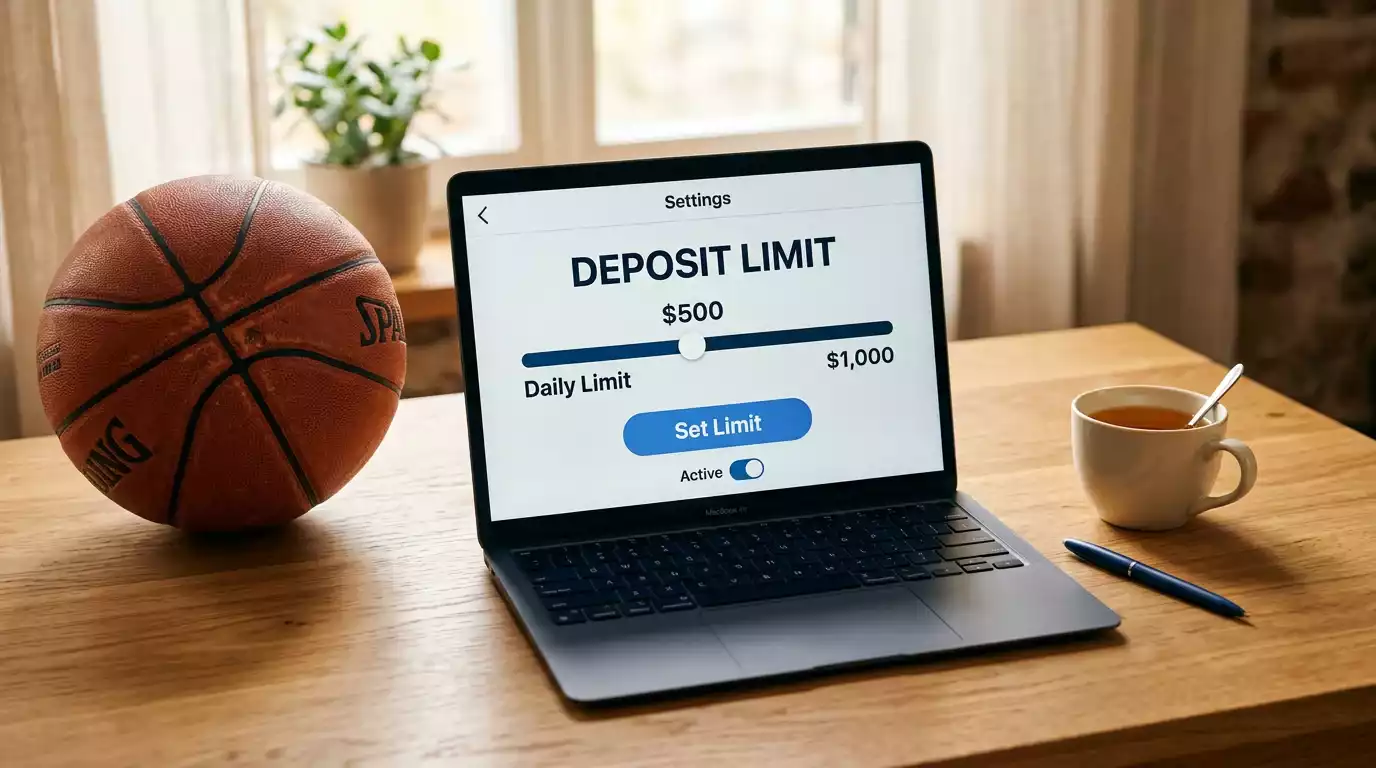
Deposit limits let you cap the amount of money you can add to your betting account within a defined period — daily, weekly, or monthly. Once you hit the limit, no further deposits are accepted until the next period begins. You can lower your limit at any time with immediate effect. Increasing it requires a cooling-off period — typically 24 to 72 hours — to prevent impulsive escalation.
Reality checks are periodic pop-up notifications that tell you how long you’ve been active on the platform and how much you’ve wagered or lost during the session. They’re designed to interrupt the flow of betting and create a moment of conscious decision-making. For basketball bettors watching late-night NBA games, reality checks serve a specific function: they pierce the tunnel vision that can develop when you’re tired, emotionally invested, and have been staring at live odds for two hours.
Self-exclusion is the strongest tool available. Through GamStop, you can register to exclude yourself from all UKGC-licensed online gambling operators for a minimum of six months, one year, or five years. During the exclusion period, you cannot open new accounts, place bets, or access your existing accounts at any participating operator. The registration is free, takes minutes, and covers every legal online sportsbook in the UK.
Between 2025 and 2026, the UKGC issued 741 notices requiring unlicensed gambling sites to cease operations and referred approximately 398,000 URLs to search engines for removal. Andrew Rhodes, CEO of the Gambling Commission, has stated that the regulator views enabling a growing gambling sector as compatible with creating a safer and fairer one. That dual mandate — growth and protection — means the regulatory tools available to you are robust, well-funded, and actively enforced.
A 2025 YouGov survey found that 65% of UK bettors would refuse to provide personal financial documents to continue betting. The Gambling Commission has acknowledged this resistance and designed its affordability checks to be less intrusive, relying on credit reference data rather than requiring punters to submit bank statements. Tim Miller, Executive Director of the UKGC, noted that the piloted checks will not attempt to assess what each individual customer can afford to gamble — they’re looking for patterns of financial distress, not auditing your spending habits.
Recognising When Betting Stops Being Fun
The shift from recreational betting to problematic betting is rarely dramatic. In my experience observing others — and being honest about moments in my own career where I’ve had to check myself — it’s gradual and easy to rationalise at every step.
The warning signs are well-documented but worth repeating in the specific context of basketball betting. Betting on games you haven’t analysed — placing a wager on a random Tuesday night NBA game because you need action — is an early indicator. Increasing your stakes after losses, particularly within the same session, is another. Feeling anxious or irritable when you’re not betting, or when you can’t access your sportsbook, signals that the activity has moved beyond entertainment.
Basketball’s schedule creates a specific trap. The NBA plays nearly every day from October to April, and the late-night UK tip-offs mean you can bet from your bed, half-asleep, with no social friction or physical barrier. Compare that to horse racing, where the meeting ends at a fixed time and the next opportunity is tomorrow. The always-on nature of basketball betting — combined with live markets that refresh in real time — creates a continuous availability that other sports don’t match.
If you recognise these patterns, practical steps exist. Activate deposit limits at every sportsbook you use. Set a hard cut-off time — no betting after midnight, for example — and enforce it by logging out or enabling self-exclusion during those hours if needed. Talk to someone you trust about what you’re experiencing. The National Gambling Helpline is available on 0808 8020 133, free and confidential. GamCare offers live chat and email support for anyone experiencing gambling-related harm.
The most important thing I’ve learned in nine years of covering this space is that the best bettors I know — the ones who are genuinely profitable over the long term — all have strict personal rules about when and how they bet. Those rules aren’t restrictions on their enjoyment; they’re the foundation that makes sustained enjoyment possible. Betting without boundaries isn’t freedom. It’s the fastest way to turn something you enjoy into something that controls you.
How does GamStop self-exclusion work for basketball betting?
GamStop is a free service that allows you to self-exclude from all UKGC-licensed online gambling operators for a chosen period of six months, one year, or five years. Once registered, you will be blocked from accessing your accounts and placing bets at any participating sportsbook. The exclusion covers all sports, including basketball. Registration can be completed online and takes effect within 24 hours.
What is the UK statutory levy and how does it fund gambling harm reduction?
The statutory levy, introduced in 2025, requires UK gambling operators to contribute a combined total of GBP 100 million annually. The funds are directed to research into gambling-related harm, prevention programmes, and treatment services. This replaced a previous voluntary system where operators chose how much to contribute, ensuring a consistent and mandatory funding stream for harm reduction.
Where can I get help if I think I have a gambling problem?
The National Gambling Helpline (0808 8020 133) offers free, confidential support and is available 24 hours. GamCare provides counselling, advice, and live chat through its website. GamStop allows you to self-exclude from all UK-licensed online betting operators. Your GP can also refer you to specialist gambling addiction services within the NHS.
Written by the editors at Basketball Betting Terms.